
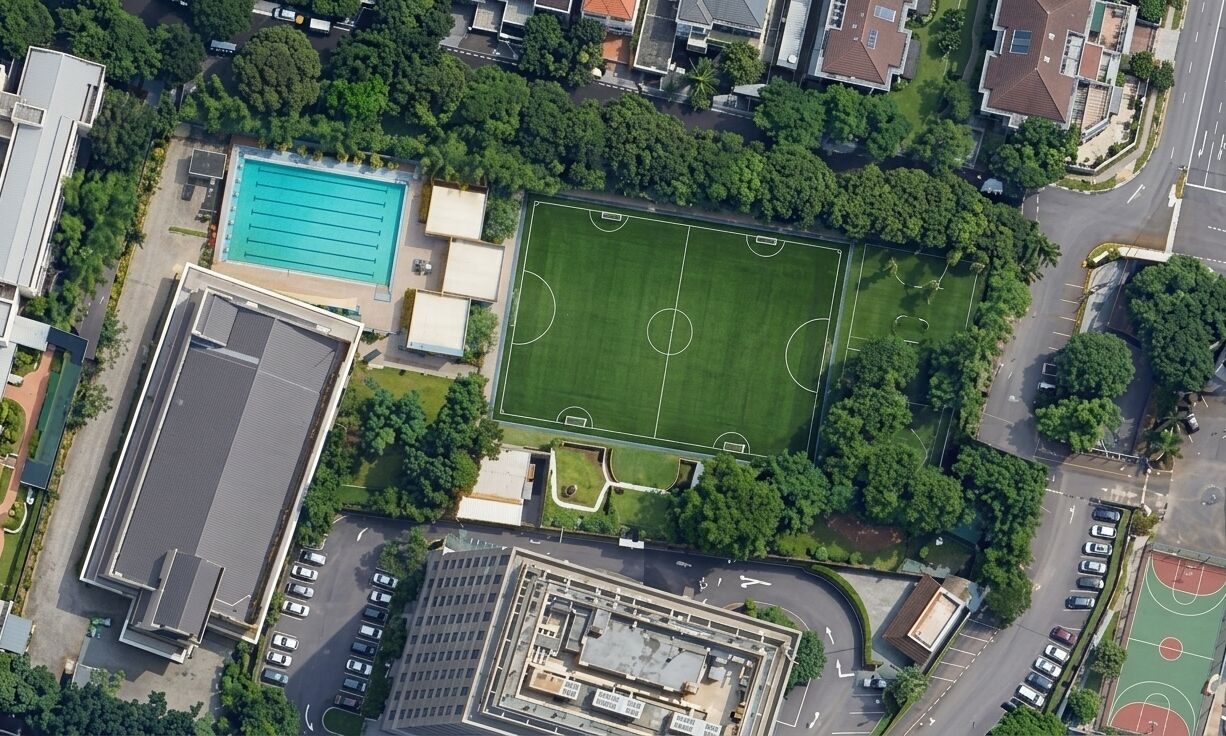
Most ISJ families live within a six-kilometre radius of the campus, in Pondok Indah, Pondok Pinang, Cipete, Cilandak, Kemang, Permata Hijau or the Senopati cluster. None of this area is served by the MRT, the LRT or the KRL commuter rail, and Phase 4 of the MRT (Fatmawati to Taman Mini) heads east rather than west. The result is that getting around the school catchment is still a road problem, not a transit problem. Spending a little time on the right decisions, an EV plate, the right ride-hailing tier, the right route and the right driver, removes most of the friction.
Traffic baseline
The 2025 TomTom Traffic Index put Jakarta's average peak speed at 15.5 km/h, with the typical driver losing roughly 125 hours a year (more than five full days) to congestion. That is 2.5 hours worse than 2024. A 10 kilometre cross-town trip in rush hour will commonly take 40 to 60 minutes. The numbers are slightly better than Manila or Bangkok and noticeably worse than Singapore.
The South Jakarta reality
For families inside the Pondok Indah, Cipete, Kemang and Cilandak belt, three structural facts matter more than any others.
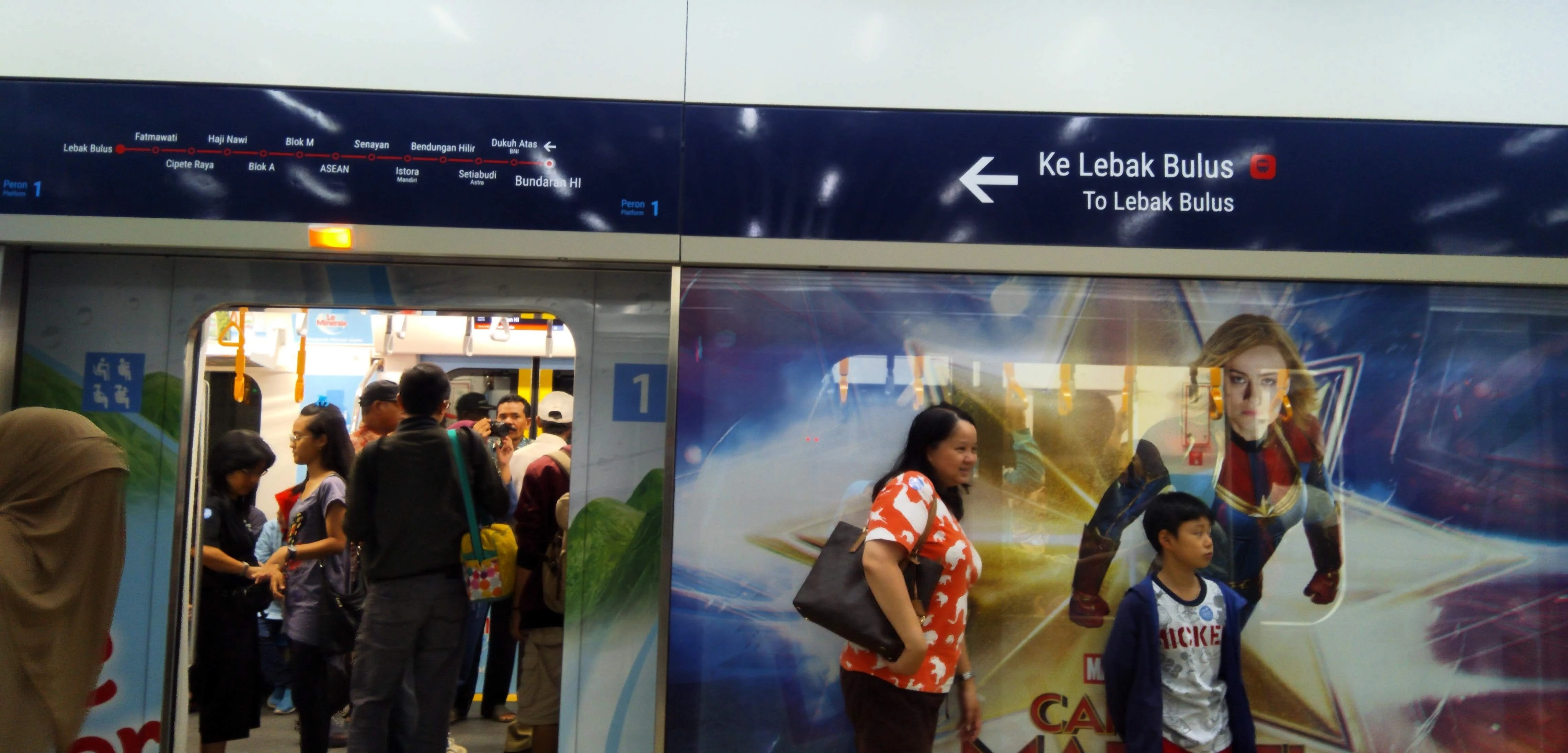
- No rail of any kind reaches the school cluster. The MRT terminates at Lebak Bulus, a ten-to-fifteen minute drive away from most ISJ homes. JIS sits inside Pondok Indah itself. ACG, NAS Jakarta and BSJ are on the other side of the city.
- JORR (Jakarta Outer Ring Road) and the JLNT are the arteries. The cluster of Tol JORR W2, JORR S, and the Antasari elevated road handle the daily flow from Pondok Indah into the CBD, Kemang into SCBD, and Cilandak out to BSD or the airport. Tolls are paid with an e-toll card on Mandiri, BCA or BNI; cash booths are gone.
- Ganjil-Genap polices the central corridors. Sudirman, Thamrin, Gatot Subroto, Rasuna Said, and 25 toll-gate access points enforce odd-even plate matching on weekdays, 06:00 to 10:00 and 16:00 to 21:00 (WIB). The fine is IDR 500,000 per breach. Most South Jakarta families work around this by holding two cars with opposite-parity plates, by routing through non-restricted roads, or by buying an EV.
The EV play
Battery electric vehicles, with the distinctive blue plates, are exempt from ganjil-genap. They are also exempt from the long-running PKB luxury vehicle tax and pay reduced parking charges across most South Jakarta malls and offices. The combination is the single biggest legal optimisation available to a Jakarta household.
The market has noticed. EV share of Indonesian passenger car sales reached 15.2 percent in Q2 2025, up from 10.1 percent the previous quarter. BYD alone holds around 30 percent of the country's pure-electric segment, with Hyundai, Wuling, Tesla and Chery taking most of the rest. Plug-in hybrids do not yet receive the ganjil-genap exemption, despite active lobbying from BYD and others.
| Common EV in the school car park | Approx. on-road price (IDR) | Range |
|---|---|---|
| Wuling Air ev (city runabout) | 250 to 300 million | 200 to 300 km |
| BYD M6 (7-seat MPV) | 380 to 430 million | 420 km |
| Hyundai Ioniq 5 | 750 to 870 million | 450 to 480 km |
| BYD Sealion 7 | 620 to 720 million | 500+ km |
| Tesla Model Y | 900 million to 1.1 billion | 500+ km |
Home charging is the right default in a landed Pondok Indah or Kemang house with PLN service of 7,700 VA or above; an electrician can install a 7 kW wall box for around IDR 15 to 25 million. Public DC fast-charging is available at most major South Jakarta malls (Pondok Indah Mall, Senayan City, Plaza Indonesia, Pacific Place, AEON BSD), at Pertamina stations along JORR, and at PLN sites. For now, a second car with a petrol engine is still the prudent setup if weekend trips to Anyer, Puncak or Bandung are routine.
Public transport at a glance
Even for a family that uses transit rarely, it pays to know what is available, because a 20-minute MRT trip beats a 75-minute drive into Sudirman whenever the corridor is moving.
| Mode | Coverage | Fare (IDR) | When it helps |
|---|---|---|---|
| MRT (North to South) | Lebak Bulus to Bundaran HI; Phase 2A to Kota due 2027 | 3,000 to 14,000 | Adult CBD meetings; teenagers heading to Plaza Indonesia or Grand Indonesia. |
| LRT Jabodebek | Cibubur and Bekasi to Dukuh Atas | 3,000 to 20,000 | Friends and family in Bekasi or Cibubur visiting. |
| TransJakarta BRT | 250+ km across 14 corridors; Royaltrans coach service IDR 20,000 | Flat 3,500 | Royaltrans from Pondok Indah to Kuningan when Sudirman gridlocks. |
| KRL Commuterline | Five lines across Jabodetabek | 3,000 to 9,000 | Day trip to Bogor for the botanical gardens; not for daily use from South Jakarta. |
| Soekarno-Hatta Railink | BNI City (Sudirman) to CGK Terminal 1, 2 and 3 | 30,000 to 100,000 | Predictable airport timing in heavy traffic. |
A single JakLingko card works across TransJakarta, MRT, LRT Jakarta and KRL.
The school run
For ISJ families, the school run is the highest-frequency journey of the week and the one where the right setup matters most.
- Pondok Indah, Pondok Pinang and Cilandak Barat. A driver with the family car is the standard pattern. Door-to-door is 5 to 15 minutes outside the morning peak and 15 to 30 minutes inside it. A handful of families on quiet streets within a kilometre of campus walk in the dry season.
- Cipete, Kemang and Cilandak KKO. 15 to 35 minutes by car depending on the Antasari and Fatmawati flow. Multiple ISJ families share a driver run, which lowers cost and gives children a familiar group routine.
- Senopati, SCBD, Permata Hijau. 20 to 45 minutes. Worth simulating during rush hour before signing a lease.
- BSD, Bintaro, Pejaten. 40 to 75 minutes and very weather-sensitive. Families who commit to ISJ from these areas typically own two cars and rotate ganjil-genap plates.
Lunchtime traffic in the Pondok Indah belt is lighter than morning, so a pickup at 14:00 is faster than a 15:30 pickup, which is faster than 16:30. Wet-season storms compress this advantage. For a fuller picture, the Jakarta school commute times piece breaks down door-to-school journey data across the city.
Ride-hailing: the premium tiers
Gojek and Grab dominate the Indonesian ride-hailing market (roughly 43 and 39 percent share). For an international school family, the standard GoCar or GrabCar is rarely the right tier. The premium tiers exist for a reason: newer cars, vetted drivers, calmer ride, sometimes a clear language buffer.
| Use case | Recommended tier | Indicative price (10 km central) |
|---|---|---|
| Spouse to a CBD meeting when the driver is on the school run | GrabCar Premium or GoCar Plus | IDR 80,000 to 130,000 |
| Teenagers to the mall | GrabCar or GoCar (standard) | IDR 35,000 to 60,000 |
| Airport drop with luggage | GrabCar XL, GoCar XL, or pre-booked Bluebird | IDR 250,000 to 450,000 depending on terminal |
| Visiting parent or guest on a single-car day | GoBlueBird, Silver Bird (My Bluebird app) | Meter plus 20 to 30 percent |
| Late night, unfamiliar pickup point | Silver Bird taxi (My Bluebird app) | Meter |
A 2025 regulation requires platforms to pass at least 92 percent of fares to drivers, up from roughly 80 percent. Modest fare increases through 2026 are likely. The two-wheeler GoRide and GrabBike are cheap and quick, but for any rider under 17, off the table; see road safety below.
What your driver needs to know
Most South Jakarta households employ a driver. Hiring one well is its own topic (covered in the helpers, drivers and household staff guide); the points below are the transport-specific ones.
- SIM A and a clean record. Ask to see the licence and to do a 30-minute test drive in city traffic before hiring. Five years' experience driving in Jakarta is the practical floor.
- The car's documents in the glovebox. STNK (annual vehicle registration), BPKB photocopy, and a valid asuransi (insurance) card. Police checkpoints (Operasi Patuh) sweep South Jakarta periodically.
- E-toll card topped up to at least IDR 200,000. Empty cards at toll gates cause the most avoidable family delays.
- Ganjil-Genap awareness. Whoever is driving needs to know which corridors apply and route around them on days the plate does not match.
- School pickup discipline. ISJ and most international schools enforce strict pickup windows and queue protocols. A driver who knows the school's system reduces wait times for children.
- A working phone and your family WhatsApp. Live ETA updates are the difference between a child waiting alone and a parent meeting them at the door.
If you drive yourself
A foreign licence or international driving permit is valid for the first three months after entry or KITAS issuance. After that, the Indonesian SIM is mandatory. Apply at SATPAS Polda Metro Jaya on Jalan Daan Mogot, West Jakarta. Only foreigners with KITAS or KITAP can apply, and only for SIM A (car) or SIM C (motorcycle). Bring passport and copy, KITAS or KITAP and copy, home-country licence, latest entry stamp, and a health certificate (clinics on-site). The theory test is available in English at Polda Metro Jaya. The licence is valid for five years.
Airport access and weekend escapes
For families who fly often, three pieces of infrastructure save the most time. None of them require a car-and-driver round trip.
Soekarno-Hatta (CGK)
- Railink from BNI City station (next to Dukuh Atas, walkable from the MRT) to CGK Terminal 1, 2 and 3. Premium IDR 30,000, Executive IDR 70,000 to 100,000. Journey 46 minutes, irrespective of road traffic. The right tool when the toll road is locked up.
- From Pondok Indah, the realistic door-to-door using Railink is 90 to 110 minutes (taxi to BNI City + train + walk in terminal). A direct GrabCar XL or Bluebird is 60 to 90 minutes outside peak, and unpredictable inside it.
- Domestic short-hops on Citilink, Lion or Batik often depart from Halim Perdanakusuma (HLP), which is much faster to reach from East Jakarta. Less useful for the South Jakarta cluster.
Bandung in 40 minutes: the Whoosh
The Whoosh high-speed train runs from Halim station to Padalarang and Tegalluar (with a feeder service to central Bandung), every 30 minutes, 350 km/h, journey time 40 minutes. Fares start at IDR 175,000 in Premium Economy, with Business and VIP classes available. The Karawang intermediate station opened in 2025.
For an ISJ family, Whoosh changes the Bandung weekend from a five-hour each-way ordeal to a doable Saturday morning. Pair it with a hotel near Dago or the Lembang district and the trip becomes a credible alternative to a long-haul weekend.
Bali, Yogyakarta, Singapore
- From South Jakarta, allow 2.5 to 4 hours door-to-gate for an international flight depending on traffic and security queues.
- Garuda Indonesia, Singapore Airlines, Scoot and AirAsia cover the family-friendly routes. The Singapore hop (90 minutes flight) is the default mid-term break weekend.
- For domestic, Garuda and Citilink lead on reliability; Lion is cheaper and more variable. Yogyakarta is 70 minutes, Bali is 100.
Road safety
Indonesia records around 31,000 road deaths a year (WHO 2021), an average of roughly 120 per day. The per-capita fatality rate is several times the United Kingdom equivalent. The practical implications for an international school family in South Jakarta:
- No motorbike taxis for school-age children. The risk profile is not comparable to anything in the UK, Singapore or Australia.
- Insist on car seats and rear belts for under-12s. Indonesian car-seat enforcement is weak, but the physics is universal. Buy or import a proper booster; do not rely on the car's lap belt for a Year 2 child.
- Set ground rules for teenagers using ride-hailing solo. Default to GrabCar or GoCar (not bike), share live trip with a parent, only travel after dark with a known driver tier, and have a phone with a working data plan.
- Seatbelts for everyone in the car, driver included. In Jakarta that often needs saying once.
- Pavements are not a given. In Pondok Indah many residential lanes have no pavement. Walking to a friend's house at dusk is riskier than it feels; arrange a pickup.
Independent teen mobility
For Year 9 and above, ride-hailing is the practical first step to independent travel in Jakarta. The norms that work well for international school families:
- Set up the teenager's own Grab and Gojek accounts (parent-funded GoPay or OVO top-up).
- Use the in-app "Share live location" or "Share trip" feature on every solo journey, set to a parent contact.
- Standard pickup points should be inside a known venue (mall lobby, school gate, friend's house), not on the street.
- Never the motorbike option.
- Curfew alignment with car-only travel; standard ride-hailing operates 24/7 but availability and surge climb sharply after midnight.
What works in each neighbourhood
| Where you live | Recommended setup |
|---|---|
| Pondok Indah, Pondok Pinang, Cilandak Barat | Family car with driver as the spine. One EV in the household to dodge ganjil-genap and a second car (petrol or EV) for weekends. Premium ride-hailing fills the gap when the driver is on the school run. |
| Kemang, Cipete, Cilandak KKO | Same pattern, with shared school-run carpool the highest-leverage saving. Antasari elevated road is the key route to know. |
| Senopati, SCBD, Permata Hijau | One car with driver, heavy use of MRT and Royaltrans for adult CBD trips. EV plate optional but useful. |
| BSD, Bintaro, Alam Sutera | Two cars with opposite-parity plates, or an EV. KRL Commuterline into the CBD for adult commutes; school run remains a long drive. |
| Bekasi, Cibubur | LRT Jabodebek into Dukuh Atas for the working parent; a driver and car for the school run and weekends. |
Indicative monthly transport budget
| Component | Monthly cost (IDR) |
|---|---|
| Full-time driver (salary 6 to 9 million + overtime + THR amortised) | 8,000,000 to 12,000,000 |
| Fuel and tolls for one car, daily school run + weekend use | 2,500,000 to 4,000,000 |
| Charging for one EV (home + occasional DC fast) | 500,000 to 900,000 |
| Maintenance, parking, occasional valet | 800,000 to 1,500,000 |
| Premium ride-hailing for spouse (10 to 15 trips per month) | 1,500,000 to 3,500,000 |
| Whoosh and Railink for occasional use | 200,000 to 800,000 |
Total for a typical two-car, one-driver South Jakarta household: IDR 13 to 22 million per month, before insurance, vehicle depreciation and the cost of the cars themselves.
For families weighing the wider relocation picture, the moving to Jakarta checklist, cost of living in Jakarta, and best neighbourhoods in Jakarta cover the surrounding financial and locational questions.